A Universal Framework for Composing Music
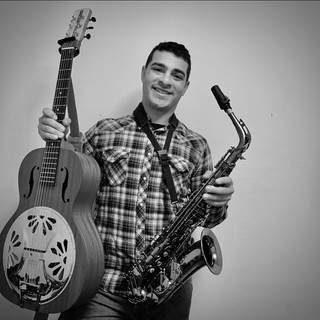

-Danté D’Angelo, 03 March 2026
1. Create a “Target” Feel (Groove/Style):
The main elements of music that should be considered in devising the “feel” of a piece are tempo, meter, mode, and the groove or style.
To determine tempo, meter, and groove/style, the composer should conduct reflection as to what is influencing them to create this music (a recent event in their life, a memory, a feeling, literature, influence by another composer’s writings).
✴ Creativity can be employed here. For example, consider a composer who is heartbroken by the recent death of a loved one. Instead of choosing a slow, lyrical tempo in a minor key, they may choose to capture their feelings of life feeling upside-down, backwards, and wrong by employing a fast, rhythmic tempo in a major key paired with sorrowful lyrics, text, or visuals (film/dance). This technique is used often at the end of sad movies, such as Rob Reiner’s Stand by Me, 1986.
Lastly, this step is described as a “target” because as the composer creates the melody and harmony, they may wish to alter (or add variations) the tempo, meter, mode, or groove/style to better fit the music being created.
2. Create Main Element #1 (Either Melody or Harmony):
Choose either melody or harmony to begin composing the piece. There is no right or wrong, it depends on whichever element first comes to the composer naturally.
A composer should not limit themselves to always writing the melody first, or harmony first. The element created first may differ from composition to composition.
Most importantly, in this step, a composer should rely exclusively on their ears and soul. If the composer has a well trained ear, the theories and techniques they have studied will emerge in a natural manner; resulting in expressive music and sounds derived from both the soul and the heart.
(Melody only) If including lyrics, they should be devised simultaneously with melody. Whether the lyrics are based off an existing piece of literature or not, it is important that the words used in the music are paired tastefully with the pitches and rhythms of the melody.
(For rhythmic or timbre-centered compositions) devise the main motif or thematic material here.
3. Create Main Element #2 (Either Melody or Harmony)
Next the composer should pair their first main element with the second. Whichever element was not used as main element #1 will be used as main element #2
Again, the composer should rely on their ears and soul in this step as these two main elements are usually where a composer’s identity most clearly shines through.
(Melody only) If including lyrics, they should be devised simultaneously with melody. Whether the lyrics are based off an existing piece of literature or not, it is important that the words used in the music are paired tastefully with the pitches and rhythms of the melody.
(For rhythmic or timbre-centered compositions) devise secondary, tertiary (etc.) motifs or thematic materials here.
4. Finalize the Feel(s) (Groove/Style):
This step revisits the first step and asks the composer to experiment with other tempos, meters, modes, and/or grooves or styles to leave no stone unturned. They may find that after creating the melody and harmony that other tempos, meters, modes, and/or grooves or styles are more appropriate
By experimenting with other tempos, meters, modes, and/or grooves/styles, the composer also explores the possibility of including variations of material in these other feels. Whether or not variations are included is paramount in determining early on as it drastically influences the form of the piece.
5. Arrange the Composition (See “A Universal Framework for Arranging Music)

Comments